


Diffusion models
Also written: Diffusion, Latent diffusion model, AI diffusion, Diffusion process, Masked Diffusion Language Agents, MDLAs
Generative AI models that create data by reversing a process of gradually adding noise.
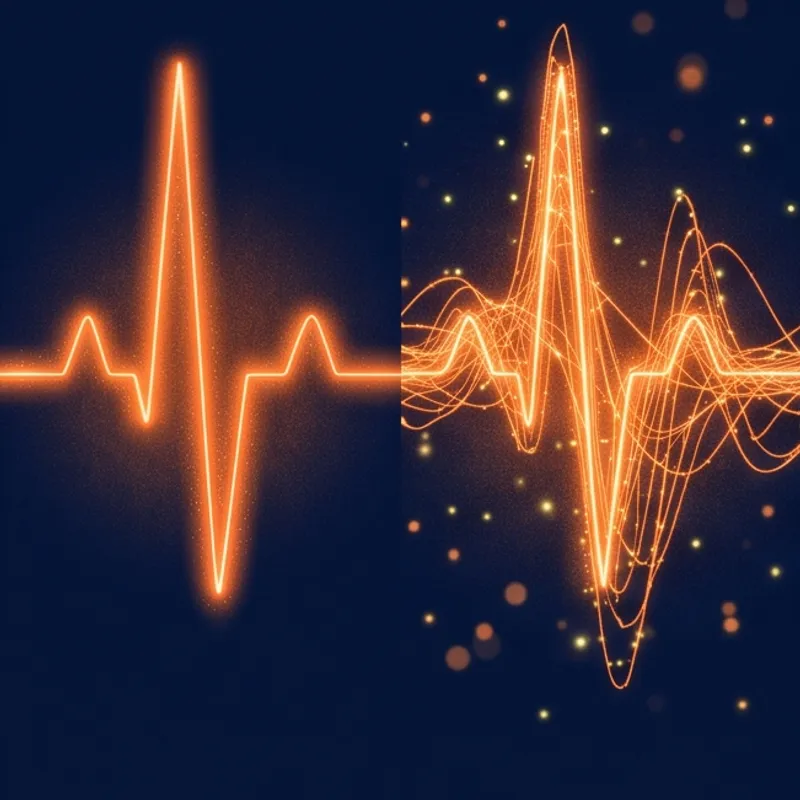
Diffusion models are a type of AI that creates new content, like images or videos, by starting with random noise and then slowly refining it. Think of it like a sculptor starting with a block of marble and chipping away until a statue emerges. The AI learns to "un-noise" the random static into a coherent piece of data.
For example, OpenAI's DALL-E uses diffusion models to turn text descriptions into unique images. You might type "a cat wearing a hat" and the model, using a diffusion process, generates a picture matching that description.
Diffusion models are a class of generative models that learn to synthesize data by reversing a diffusion process. This process involves gradually adding noise to training data until it becomes pure noise, and the model is trained to denoise this data step-by-step, effectively learning the reverse of the noise-adding process. This iterative denoising allows for the generation of high-fidelity data, though it can be computationally intensive during inference compared to other generative methods.
Diffusion models are a core generative AI technology, underpinning recent advances in image and video creation. New research is exploring their application beyond media, such as in complex reasoning tasks for AI agents, and developing faster, more efficient variations.
- Masked Diffusion Language Agents for Tool-Integrated Chemical ReasoningAnthropic · arXiv cs.AI ·
- Automating coherent long-form video generationGoogle · Google Research Blog ·
- AI adoption is growing worldwide, but regional gaps are wideningMicrosoft · Microsoft Source ·
- It's all about the angle: Your photos, re-composedGoogle · Google Research Blog ·
- #225 - GPT 5.1, Kimi K2 Thinking, Remote Labor IndexOpenAI · Last Week in AI ·
- Sora System CardOpenAI · OpenAI News ·
- Simplifying, stabilizing, and scaling continuous-time consistency modelsOpenAI · OpenAI News ·
- Consistency ModelsOpenAI · OpenAI News ·
- Expanding on how Voice Engine works and our safety researchOpenAI · OpenAI News ·
- Video generation models as world simulatorsOpenAI · OpenAI News ·
- Point-E: A system for generating 3D point clouds from complex promptsOpenAI · OpenAI News ·
- DALL·E now available without waitlistOpenAI · OpenAI News ·
- Hierarchical text-conditional image generation with CLIP latentsOpenAI · OpenAI News ·
- Anthropic Claude
- Anthropic is using diffusion models in new AI agents for complex reasoning, like in chemical analysis.
- Google Gemini
- Google uses diffusion model concepts in AI features that allow users to re-frame photos after they are taken.
- OpenAI ChatGPT
- OpenAI has developed and researched diffusion models for image generation, and is working on faster alternatives like consistency models.
- Generative Adversarial Networks (GANs)
- GANs use two networks, a generator and a
- Variational Autoencoders (VAEs)
- VAEs learn a compressed representation of data
- Autoregressive Models
- These models generate data sequentially, predicting the n
The core ideas behind diffusion models trace back to statistical physics and thermodynamics, with significant contributions from machine learning researchers applying these concepts to generative modeling. Source ↗
Use an AI image generator like OpenAI's DALL-E 3. Type a descriptive prompt, such as 'a watercolor painting of a futuristic city at sunset.' Observe the generated image, noting how the AI interprets your text to create a visual output. Experiment with different prompts to see the range of images the model can produce.
The Playbook: reusable how-tos, prompts, configs and tips pulled out of the news.
- HeuristicConsistency models for accelerated generative AIConsistency models offer a faster alternative to diffusion models for high-quality sample generation. · 5 min
- PromptRole-play a student struggling with math for AI tutor simulationSimulate a student's math struggles and uncertainty for AI tutor evaluation. · 5 min
- TemplateReusable workflow templates for healthcare teamsTeams can create and share templates for common workflows like documentation or prior authorizations. · 15 min
- TemplateTemplate for building an AI tool tailored to your workA structured approach to defining and building a custom AI tool for specific business needs. · 15 min
- TemplateEvals CSV prompt list for agent skillsA CSV file template for listing prompts used in evaluating agent skills. · 20 min
Questions people ask
- How do diffusion models create images?
- They start with random noise and iteratively remove the noise, guided by learned patterns, until a clear image emerges.
- Are diffusion models fast?
- Generating images can take time due to the many steps involved, but researchers are developing faster methods and variations.
- What kind of data can diffusion models generate?
- They can generate various types of data, including images, audio, and even video, by learning from large datasets.
First seen on Subvolts Apr 13, 2022. Updated Oct 16, 2026. Written by an AI model from the items above and reviewed against them weekly; report an error.