


Distribution shift
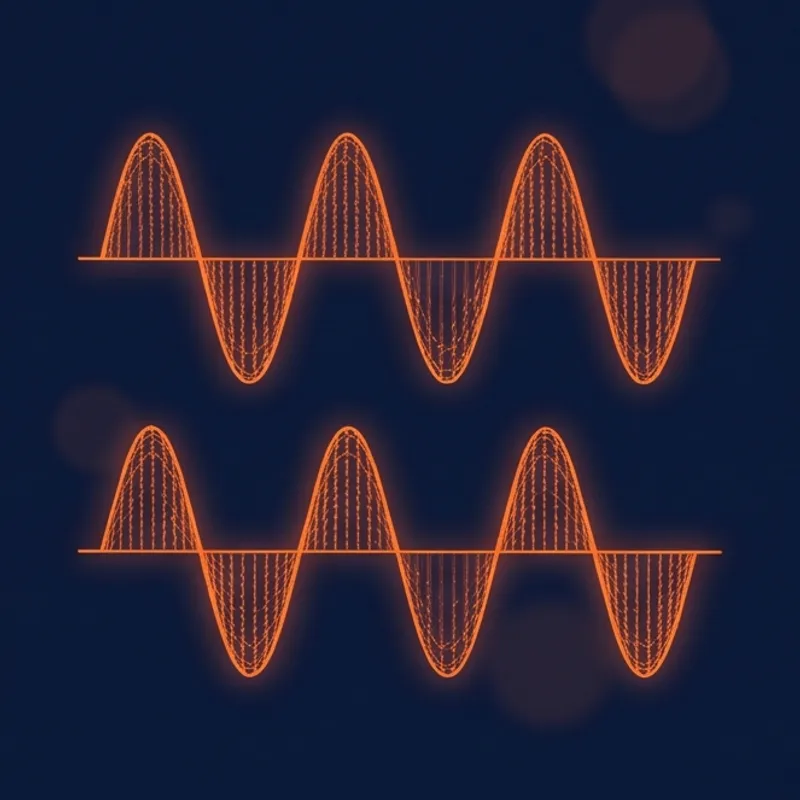
When a model encounters data that is statistically different from the data it was trained on.
Imagine training a dog to fetch a red ball. If you then ask it to fetch a blue ball, it might get confused because the color is different from what it learned. Distribution shift is similar for AI models.
The data a model sees during training is its "normal world." When the model is used in the real world, or tested, and the data it encounters has different characteristics than its training data, that's distribution shift. This can lead to the model making mistakes or performing poorly.
Distribution shift occurs when the joint probability distribution of input features and target variables in the test or deployment set differs from that of the training set. This can manifest as covariate shift (P(X_test) != P(X_train)), prior probability shift (P(Y_test) != P(Y_train)), or concept drift (P(Y_test|X_test) != P(Y_train|X_train)). It is a common challenge in machine learning that degrades model performance and generalization capabilities, often requiring techniques like domain adaptation, robust training methods, or continuous monitoring and retraining.
Frontier AI models are increasingly deployed in dynamic, real-world environments where data naturally shifts over time. Understanding and mitigating distribution shift is crucial for maintaining model reliability and safety as these models interact with novel or evolving data distributions, as highlighted by OpenAI's work on uncertainty estimation.
- Teaching models to express their uncertainty in wordsOpenAI · OpenAI News ·
- OpenAI ChatGPT
- OpenAI's research on uncertainty estimation touches upon how models can signal when they are encountering data outside their training distribution, a key aspect of handling distribution shift.
- Overfitting
- Overfitting occurs when a model learns the training data too well,
- Underfitting
- Underfitting happens when a model is too simple to capture the und
- Bias
- Bias refers to systematic errors in a model's predictions, often stemming
The concept of distribution shift originates from statistical learning theory and econometrics, with formalization in machine learning literature dating back decades. Early work on covariate shift and related problems laid the groundwork for understanding how changes in data distributions affect model performance. Source ↗
Ask a model like ChatGPT to summarize a news article from today. Then, ask it to summarize a historical document from the 1800s. Notice if the quality or style of the summary changes, indicating the model might be less familiar with the older text's language and context.
The Playbook: reusable how-tos, prompts, configs and tips pulled out of the news.
- PromptRole-play a student struggling with math for AI tutor simulationSimulate a student's math struggles and uncertainty for AI tutor evaluation. · 5 min
- TemplateReusable workflow templates for healthcare teamsTeams can create and share templates for common workflows like documentation or prior authorizations. · 15 min
- TemplateTemplate for building an AI tool tailored to your workA structured approach to defining and building a custom AI tool for specific business needs. · 15 min
- TemplateEvals CSV prompt list for agent skillsA CSV file template for listing prompts used in evaluating agent skills. · 20 min
- HeuristicDouble coding agent task completion with docs linksProviding coding agents with a documentation link significantly increases their task completion rate. · 2 min
Questions people ask
- What happens when a model experiences distribution shift?
- When a model encounters distribution shift, its performance typically degrades. It may produce inaccurate predictions, exhibit unexpected behaviors, or fail to generalize well to the new data.
- How can distribution shift be prevented?
- Distribution shift cannot always be prevented, but it can be mitigated. Strategies include using diverse and representative training data, employing domain adaptation techniques, continuously monitoring model performance in deployment, and retraining models on new data.
First seen on Subvolts May 28, 2022. Updated Sep 15, 2026. Written by an AI model from the items above and reviewed against them weekly; report an error.