


Islands of compute
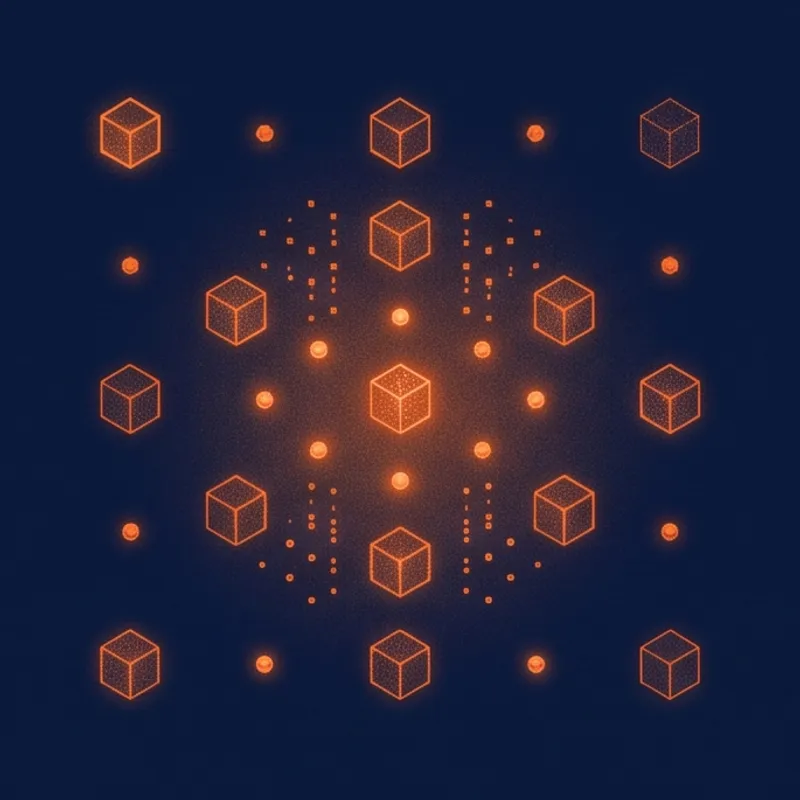
Separate groups of computers used for training AI that can work somewhat independently.
Imagine you're training a very large AI model, like one that understands language. Instead of using one giant supercomputer, you can use many smaller groups of computers spread out in different locations. These separate groups are like islands. They can do their own work on parts of the AI training, and only need to connect with each other occasionally.
This helps make training faster and more reliable. If one island has a problem, the others can keep working. Google DeepMind's Decoupled DiLoCo system uses this idea to train AI models across different data centers more efficiently.
Islands of compute refer to distinct, often geographically distributed, clusters of computational resources dedicated to AI model training or inference. These clusters operate with a degree of autonomy, minimizing constant, high-bandwidth synchronization between them. This architecture enhances fault tolerance and can improve training efficiency by allowing independent processing of data shards or model parameters.
The primary benefit is resilience; failure within one island does not necessarily halt the entire process. Tradeoffs include increased complexity in coordination and potential latency issues when inter-island communication is required. This approach is particularly relevant for large-scale distributed training where network stability and bandwidth can be limiting factors.
This concept is gaining traction as AI models become too large to train on single clusters. Companies are exploring ways to distribute training across multiple data centers for efficiency and resilience, especially as they push the boundaries of model scale.
- Decoupled DiLoCo: A new frontier for resilient, distributed AI trainingGoogle · Google DeepMind Blog ·
- Google Gemini
- Google DeepMind's work on systems like Decoupled DiLoCo demonstrates an approach to distributed AI training that utilizes separate clusters or 'islands' of compute.
- Sharding
- Sharding typically refers to splitting data across multiple databases
- Federated Learning
- Federated learning trains models on decentralized data resid
- Microservices
- Microservices are an architectural style for building application
The term 'islands of compute' is descriptive and likely emerged organically within the distributed systems and high-performance computing communities to describe physically separated yet interconnected computational resources.
While directly creating 'islands of compute' is complex, you can explore distributed concepts by running a simple parallel processing job on two separate machines on your network. Use libraries like Python's `multiprocessing` or `dask` to distribute tasks and observe how they coordinate.
The Playbook: reusable how-tos, prompts, configs and tips pulled out of the news.
- PromptRole-play a student struggling with math for AI tutor simulationSimulate a student's math struggles and uncertainty for AI tutor evaluation. · 5 min
- TemplateReusable workflow templates for healthcare teamsTeams can create and share templates for common workflows like documentation or prior authorizations. · 15 min
- TemplateTemplate for building an AI tool tailored to your workA structured approach to defining and building a custom AI tool for specific business needs. · 15 min
- TemplateEvals CSV prompt list for agent skillsA CSV file template for listing prompts used in evaluating agent skills. · 20 min
- HeuristicDouble coding agent task completion with docs linksProviding coding agents with a documentation link significantly increases their task completion rate. · 2 min
Questions people ask
- What is the main advantage of islands of compute?
- The main advantage is increased resilience. If one group of computers fails, the others can continue working, preventing the entire training process from stopping.
- How do these islands communicate?
- They communicate over networks, but the goal is to minimize constant, high-speed connections. They typically exchange information or results periodically rather than in real-time.
First seen on Subvolts Apr 22, 2026. Updated Sep 15, 2026. Written by an AI model from the items above and reviewed against them weekly; report an error.