


Numerical physics
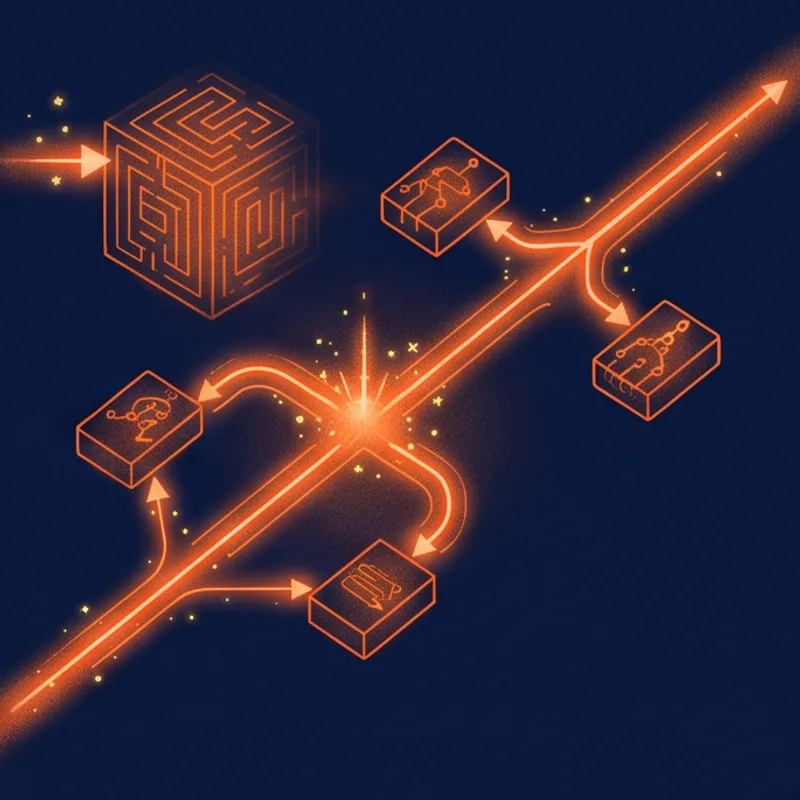
Using math and computers to simulate how the physical world works.
Numerical physics uses math and computer simulations to understand and predict how things in the real world behave. Think about predicting the weather. Scientists use complex math equations that describe the atmosphere and then run them on powerful computers to forecast temperature, rain, and wind.
This approach is crucial for many scientific fields. It helps design airplanes by simulating airflow, understand how drugs interact with the body, or even explore how stars form. It's like building a virtual laboratory to test ideas without needing a physical one.
Numerical physics involves solving physical problems using computational methods and mathematical approximations. Instead of finding exact analytical solutions, which are often impossible for complex systems, numerical methods discretize space and time to approximate solutions. Common techniques include finite difference, finite element, and spectral methods, applied to solve differential equations governing physical phenomena.
These methods are essential for simulating complex systems where analytical solutions are intractable. Tradeoffs involve accuracy versus computational cost, with higher resolution and more sophisticated methods demanding greater resources. The reliability of simulations depends heavily on the chosen numerical schemes, grid resolution, and the accuracy of the input physical models.
AI is increasingly used to advance scientific discovery, including in fields like physics. Companies like Google are applying AI to complex problems such as weather forecasting, which relies heavily on numerical physics models. This suggests AI's growing role in simulating and understanding physical systems.
- Can AI help us better predict the weather?Google · Google DeepMind on YouTube ·
- Can AI help us better predict the weather?Google · Google DeepMind: The Podcast ·
- Google Gemini
- Google Gemini is using AI models like WeatherNext 3 and GraphCast to improve weather prediction, a field that relies on numerical physics to simulate atmospheric conditions.
- Theoretical physics
- Theoretical physics aims to develop mathematical models and
- Experimental physics
- Experimental physics involves conducting physical experime
The roots of numerical physics trace back to early computational efforts in the mid-20th century, driven by the development of electronic computers. Pioneers in fields like hydrodynamics and nuclear physics used these new machines to solve complex equations that were previously intractable.
You can explore numerical physics concepts by using online weather forecast models. Many websites and apps provide detailed forecasts based on complex simulations. Observe how they predict temperature, precipitation, and wind over time, and consider the underlying mathematical models and computational power required.
The Playbook: reusable how-tos, prompts, configs and tips pulled out of the news.
- PromptRole-play a student struggling with math for AI tutor simulationSimulate a student's math struggles and uncertainty for AI tutor evaluation. · 5 min
- TemplateReusable workflow templates for healthcare teamsTeams can create and share templates for common workflows like documentation or prior authorizations. · 15 min
- TemplateTemplate for building an AI tool tailored to your workA structured approach to defining and building a custom AI tool for specific business needs. · 15 min
- TemplateEvals CSV prompt list for agent skillsA CSV file template for listing prompts used in evaluating agent skills. · 20 min
- HeuristicDouble coding agent task completion with docs linksProviding coding agents with a documentation link significantly increases their task completion rate. · 2 min
Questions people ask
- What is the difference between numerical physics and theoretical physics?
- Theoretical physics develops abstract models and theories, while numerical physics uses computers to solve mathematical equations that describe physical systems.
- How does AI relate to numerical physics?
- AI can be used to accelerate or improve the accuracy of numerical physics simulations, or to discover new physical models from data.
First seen on Subvolts Sep 9, 2026. Updated Sep 16, 2026. Written by an AI model from the items above and reviewed against them weekly; report an error.