


Spatial VR paintings
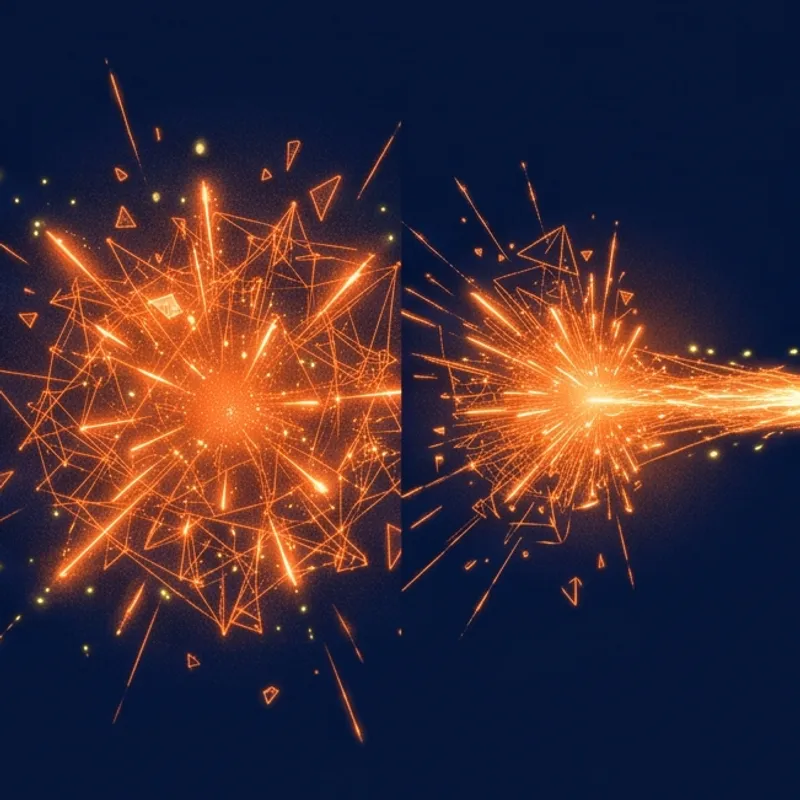
Virtual reality art that exists in 3D space, allowing interaction and multiple viewing angles.
Spatial VR paintings are artworks created within virtual reality environments. Instead of being flat on a canvas, these creations have depth and exist in three-dimensional space.
Imagine walking around a sculpture that is made of light and color. You can view it from all sides, and sometimes even interact with it. Meta's tools allow artists to build these immersive experiences, turning virtual reality into a new kind of gallery.
Spatial VR paintings refer to three-dimensional digital artworks created and experienced within virtual reality environments. These works leverage VR's immersive capabilities to place art in a navigable 3D space, moving beyond traditional 2D canvases. Artists can utilize VR sculpting and painting tools to build complex forms and environments that users can explore from multiple perspectives.
This medium allows for a unique interplay between the artwork and the viewer's physical presence, enabling experiences that are impossible in real-world galleries. The creation process often involves specialized VR software and hardware, with outputs ranging from static 3D models to dynamic, interactive installations.
Meta is highlighting how its VR and AI tools allow artists to create and display immersive art. This showcases the growing intersection of virtual reality, artificial intelligence, and creative expression, enabling new forms of digital art that exist in three-dimensional space.
- Reel of the Week | AR + VR Street ArtMeta · Meta on YouTube ·
- Meta Meta AI
- Meta's tools enable artists to create and exhibit spatial VR paintings, blending virtual reality and AI for immersive art experiences.
- 360-degree paintings
- These are flat images that wrap around the viewer, but the
- Digital paintings
- These are typically 2D artworks created on a screen, not exis
- VR environments
- While spatial VR paintings exist within VR environments, the te
The concept of spatial VR paintings emerged with the development of virtual reality art tools and platforms that allow for 3D creation within VR. Specific tools like Tilt Brush (now Open Brush) and Adobe Medium pioneered this space. Source ↗
Download a VR art application like Open Brush or Adobe Medium on a VR headset. Use the tools to paint or sculpt in 3D space, creating shapes and forms that you can walk around and view from different angles. Experiment with different brushes and colors to build your own spatial artwork.
The Playbook: reusable how-tos, prompts, configs and tips pulled out of the news.
- PromptRole-play a student struggling with math for AI tutor simulationSimulate a student's math struggles and uncertainty for AI tutor evaluation. · 5 min
- TemplateReusable workflow templates for healthcare teamsTeams can create and share templates for common workflows like documentation or prior authorizations. · 15 min
- TemplateTemplate for building an AI tool tailored to your workA structured approach to defining and building a custom AI tool for specific business needs. · 15 min
- TemplateEvals CSV prompt list for agent skillsA CSV file template for listing prompts used in evaluating agent skills. · 20 min
- HeuristicDouble coding agent task completion with docs linksProviding coding agents with a documentation link significantly increases their task completion rate. · 2 min
Questions people ask
- What is the difference between a spatial VR painting and a regular painting?
- A regular painting is flat and viewed from one perspective. A spatial VR painting exists in 3D virtual space, allowing you to move around it and see it from all sides.
- Can I interact with spatial VR paintings?
- Some spatial VR paintings are interactive, meaning you might be able to change them, trigger animations, or trigger sounds within the virtual environment.
First seen on Subvolts Sep 18, 2026. Updated Sep 25, 2026. Written by an AI model from the items above and reviewed against them weekly; report an error.