


Spikey
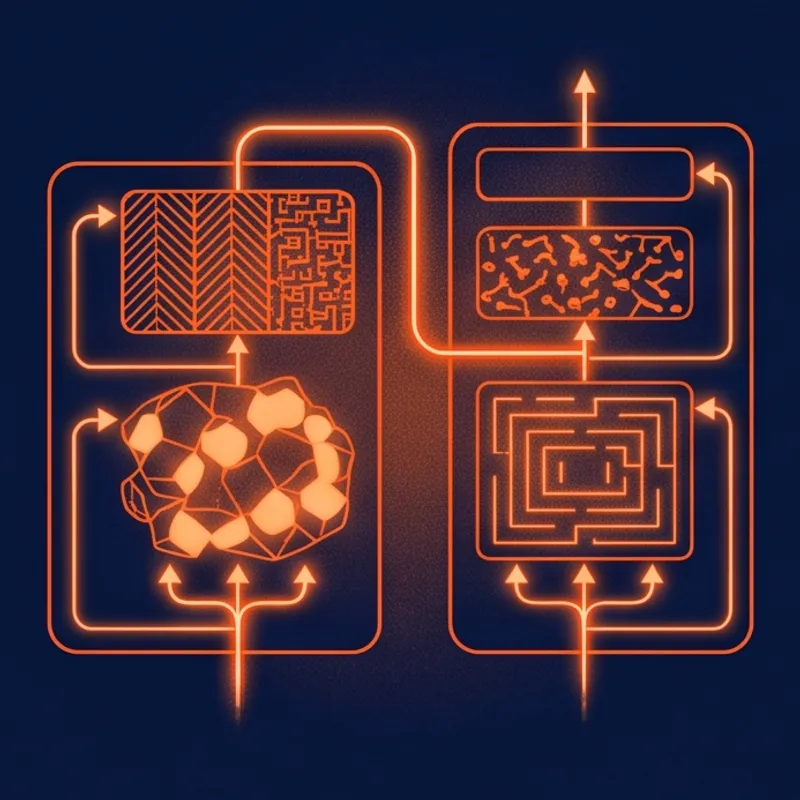
AI that excels in specific tasks but struggles significantly in others, showing uneven capabilities.
Spikey AI refers to systems that are exceptionally good at certain jobs but perform poorly on others. Think of it like a student who aces math tests but fails English class. The AI might be brilliant at playing chess or writing code, but then completely miss the point when asked to understand a simple joke or a nuanced social situation.
This unevenness is common in current AI. While AI can now do amazing things, it often lacks the broad, general understanding that humans have. A spikey AI is one where its strengths are very high, but its weaknesses are also very pronounced.
Spikey refers to AI systems exhibiting highly variable performance across different tasks or domains. These systems demonstrate super-human capabilities in narrow areas, often due to specialized training or architectural advantages, while simultaneously failing on tasks requiring more general intelligence or common sense reasoning. This phenomenon highlights the gap between narrow AI proficiency and Artificial General Intelligence (AGI).
The tradeoff is often between achieving peak performance on specific benchmarks and maintaining robust, generalized competence. Current large language models, despite their impressive emergent abilities, can still exhibit spikey behavior, particularly when encountering out-of-distribution data or tasks that probe reasoning beyond their direct training objectives.
The term 'spikey' is relevant now as frontier AI models demonstrate increasingly powerful capabilities in specific domains, yet still exhibit surprising failures in others. This uneven performance is a key characteristic of current AI progress, prompting discussions about the path to more general intelligence and the limitations of today's systems.
- AI progress and recommendationsOpenAI · OpenAI News ·
- OpenAI ChatGPT
- OpenAI's models can exhibit spikey behavior, performing exceptionally well on certain benchmarks or tasks while struggling with others that require different kinds of reasoning or knowledge.
- Overfitting
- Overfitting occurs when a model learns the training data too well,
- Brittleness
- Brittleness describes a system that fails catastrophically when enc
- Specialization
- Specialization is a deliberate design choice to excel in one are
The term 'spikey' emerged from the AI research community to describe the observed performance profiles of AI models, particularly large language models, which show extreme highs in some areas and significant lows in others.
Ask an AI model to solve a complex math problem, then immediately ask it to explain a simple idiom or a social cue. Observe if it excels at the math but fails to grasp the nuance of the idiom, demonstrating its spikey nature.
The Playbook: reusable how-tos, prompts, configs and tips pulled out of the news.
- PromptRole-play a student struggling with math for AI tutor simulationSimulate a student's math struggles and uncertainty for AI tutor evaluation. · 5 min
- TemplateReusable workflow templates for healthcare teamsTeams can create and share templates for common workflows like documentation or prior authorizations. · 15 min
- TemplateTemplate for building an AI tool tailored to your workA structured approach to defining and building a custom AI tool for specific business needs. · 15 min
- TemplateEvals CSV prompt list for agent skillsA CSV file template for listing prompts used in evaluating agent skills. · 20 min
- HeuristicDouble coding agent task completion with docs linksProviding coding agents with a documentation link significantly increases their task completion rate. · 2 min
Questions people ask
- Is spikey AI bad?
- Not necessarily. Spikeyness is a characteristic of current AI. It means the AI is very good at some things, which is useful, but it also highlights limitations in its general understanding.
- Will AI always be spikey?
- The goal of much AI research is to move beyond spikey behavior towards more general and consistent intelligence. Future AI may be less spikey as models become more capable across a wider range of tasks.
First seen on Subvolts Nov 6, 2025. Updated Sep 15, 2026. Written by an AI model from the items above and reviewed against them weekly; report an error.