


 Subvolts take Google Gemini uses deep learning and satellite data to map global methane emissions from space. Sep 1, 2026
 Rated low: routine. Worth knowing, not worth rearranging your day for.
Mapping global methane emissions from space with deep learning

Climate & Sustainability
Opening of the original on Google Research Blog From Subvolts
Summary and analysis by Subvolts editorial, AI-assisted.
Google Gemini researchers developed a deep learning model that maps global methane emissions from space. The system uses satellite data to pinpoint emission sources with unprecedented accuracy. This advancement allows for better tracking and mitigation of methane, a potent greenhouse gas. The model integrates data from multiple satellites, overcoming previous limitations in spatial and temporal resolution. This work contributes to climate science and policy.
Google's Gemini AI can now map methane emissions from space using satellite data and deep learning. This helps scientists track pollution more accurately to better address climate change.
This research offers a significant leap in monitoring a key greenhouse gas. Previous methods struggled with resolution and coverage. Google's deep learning approach, leveraging satellite data, provides a more granular and comprehensive view of methane sources. This impacts environmental agencies, climate researchers, and policymakers globally. Competitors like OpenAI and Anthropic focus on general AI capabilities, while Google's Gemini team demonstrates applied AI for specific environmental challenges. Future work will likely involve refining the model and integrating real-time data streams for dynamic emissions tracking.




The Playbook: reusable how-tos, prompts, configs and tips pulled out of the news. From the Playbook, matched to the product and topics of this item.
- HeuristicStep-level feedback for slide generation refinementProvide feedback after each small edit, not just at the end of a full revision cycle. · 10 min
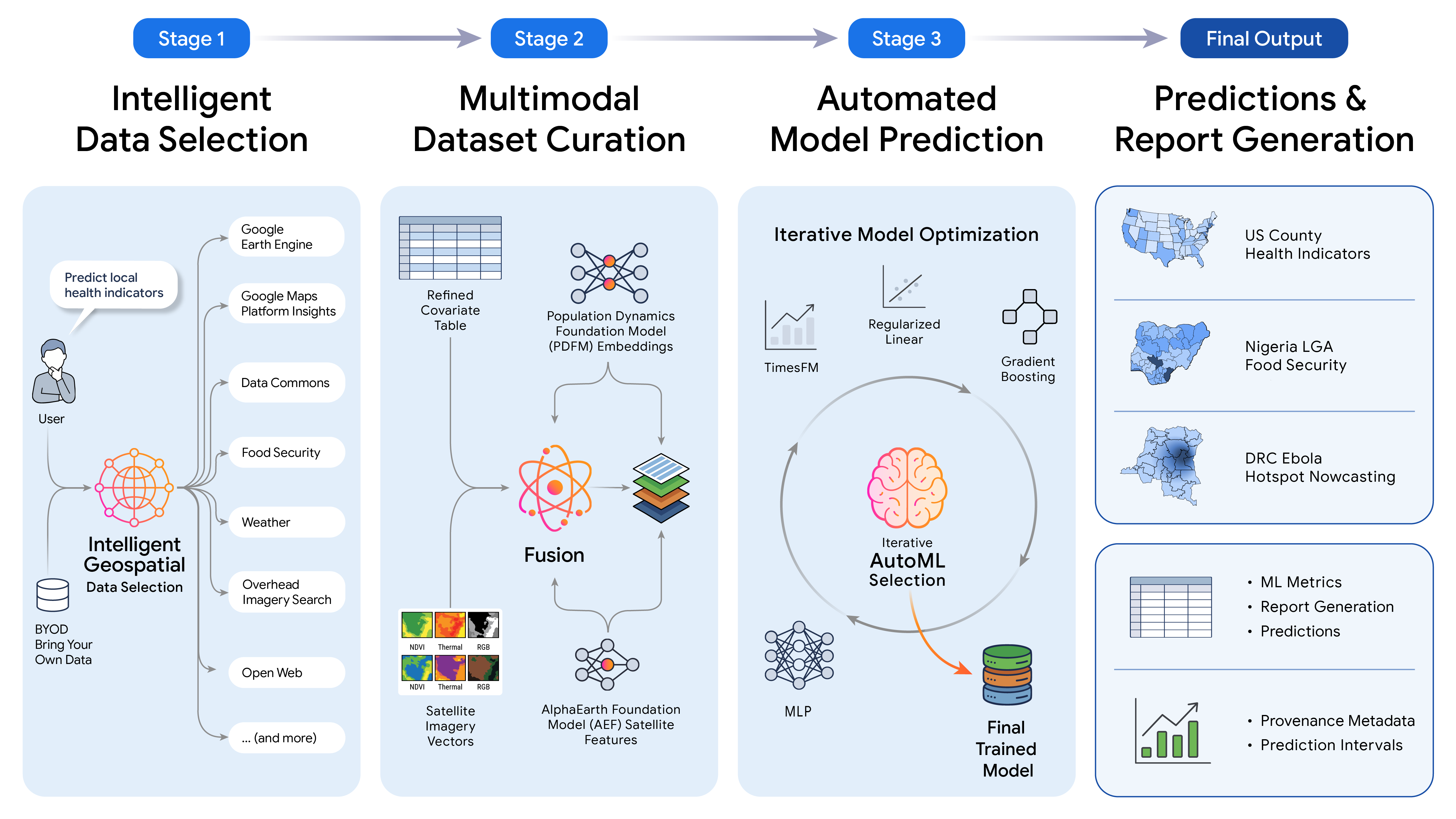
- WorkflowPlanetary Prediction Engine's three-stage geospatial modeling workflowAutonomous execution of geospatial prediction tasks through modular AI stages. · 10 min
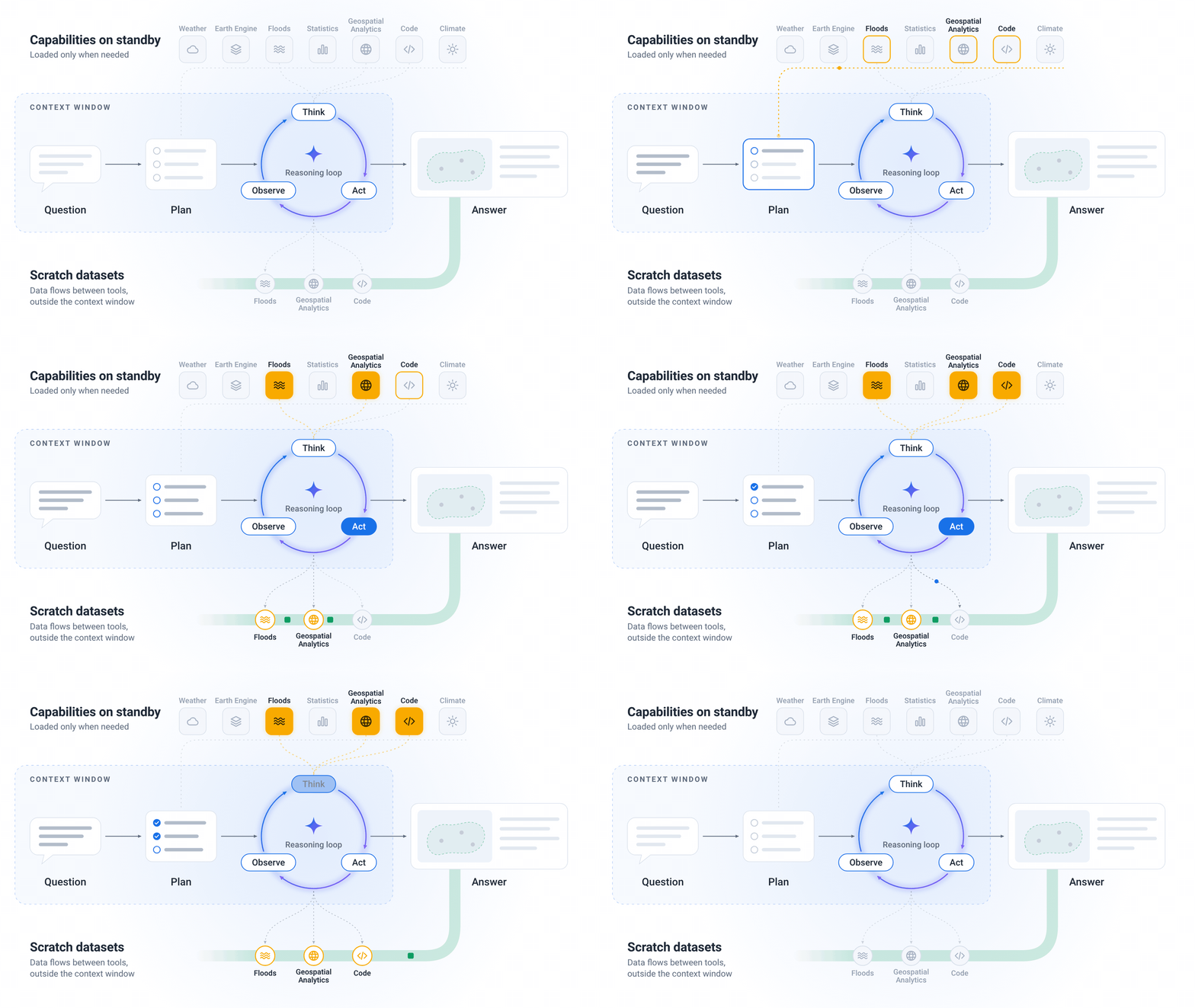
- HeuristicAI for flash flood forecasting needs novel data methodsTraditional ML models struggle with flash floods due to lack of ground truth data. · 5 min
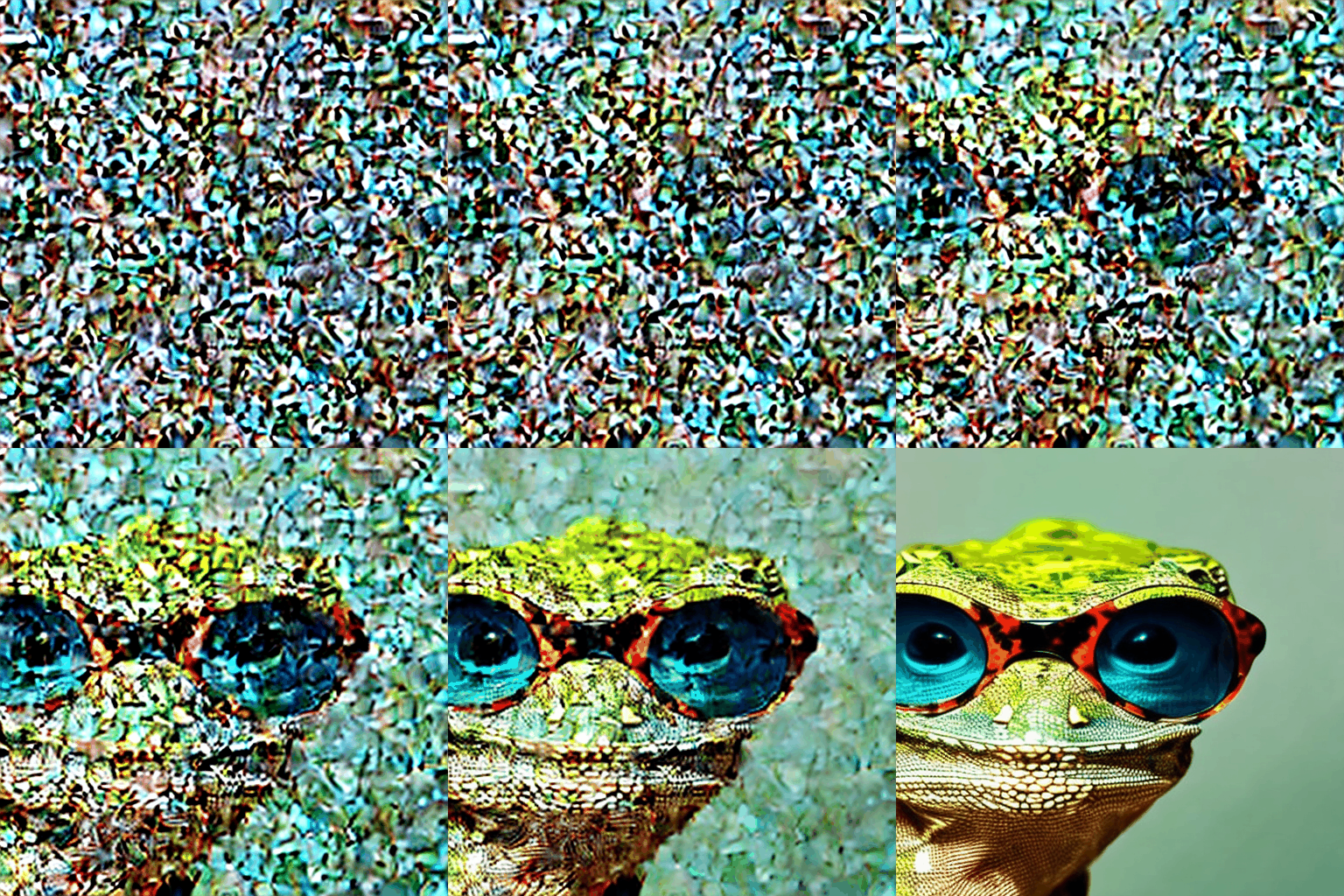
- ToolStitch AI experiment for UI design and frontend code generationStitch is an AI experiment that turns prompts and images into UI designs and frontend code. · 10 min
Questions people ask
- What is the main goal of this Google Gemini research?
- The research aims to map global methane emissions from space with high accuracy using deep learning. This helps in tracking and mitigating a potent greenhouse gas.
- How does this new methane mapping system work?
- It uses deep learning models to analyze satellite data, integrating information from multiple sources to pinpoint emission locations with improved spatial and temporal resolution.
More from Google Research Blog 72 more




Page generated Oct 19, 2026. Summaries are Subvolts' own; the story belongs to Google Research Blog.