


 Subvolts take GPT-5 optimizes wet lab biological research, improving cloning efficiency by 79x. Dec 16, 2025
 - Developers
- This shows AI's potential for complex problem solving beyond coding, opening new avenues for AI-assisted scientific tool development.
- Business
- AI can now directly impact experimental efficiency and cost reduction in R&D, particularly in biotech and pharmaceutical sectors.
AI models can now autonomously propose and optimize complex wet lab biological protocols, accelerating scientific discovery.
Measuring AI’s capability to accelerate biological research
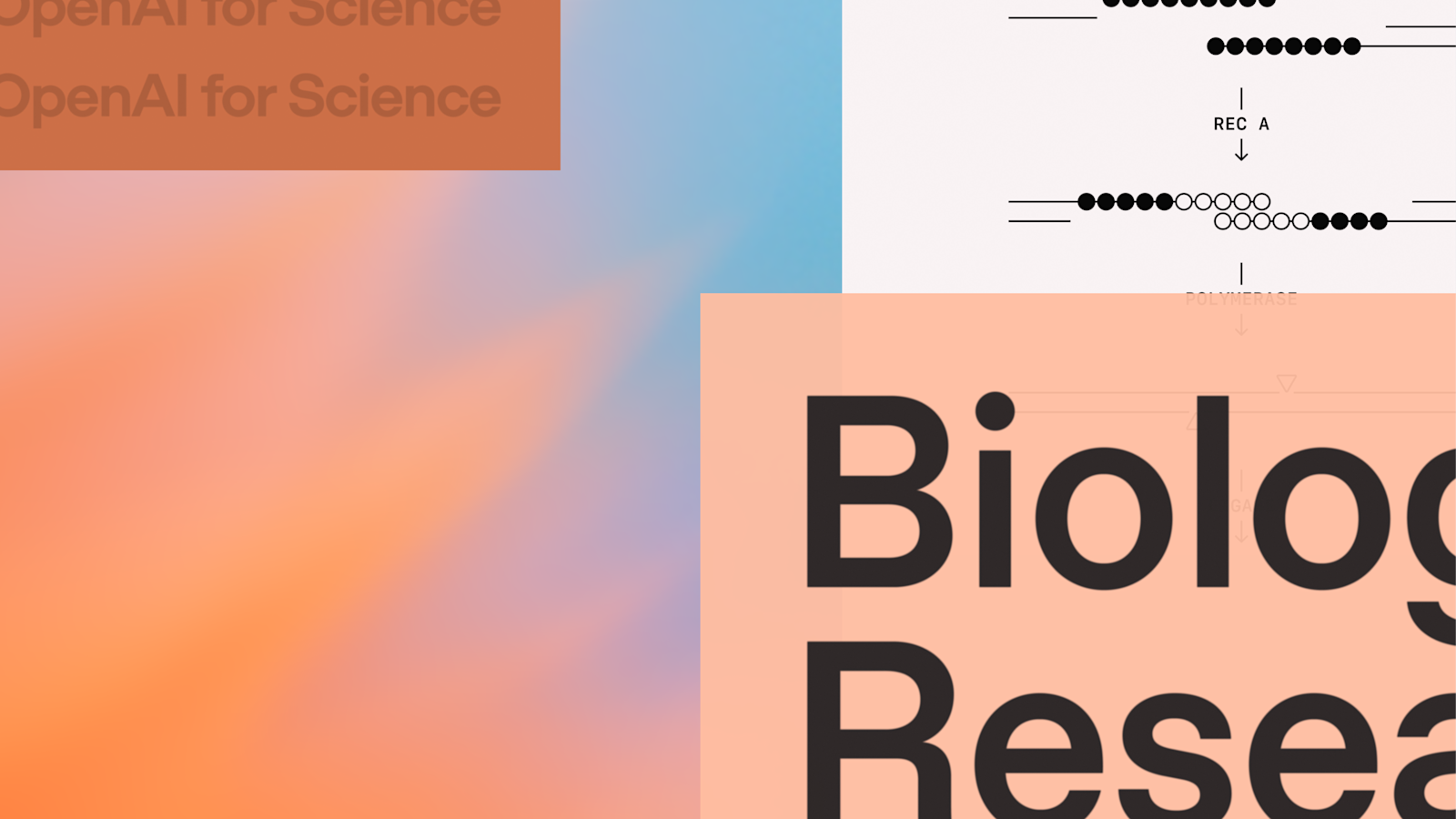
GPT‑5 created novel wet lab protocol improvements, optimizing the efficiency of a molecular cloning protocol by 79x. Accelerating scientific progress is one of the most valuable ways AI can benefit humanity. With GPT‑5, we’re beginning to see early signs of this—not only in helping researchers move faster through the scientific literature, but also in supporting new forms of scientific reasoning, such as surfacing unexpected connections, proposing proof strategies, or suggesting plausible mechanisms that experts can evaluate and test. Progress to date has been most visible in fields like mathematics, theoretical physics, and theoretical computer science, where ideas can be rigorously checked without physical experiments. Biology is different: most advances depend on experimental execution, iteration, and empirical validation in the laboratory.
Opening of the original on OpenAI News From Subvolts
Summary and analysis by Subvolts editorial, AI-assisted.
OpenAI's GPT-5 significantly advanced biological research by optimizing a molecular cloning protocol by 79x. This AI model autonomously proposed novel mechanisms, including the use of RecA and gp32 enzymes, to improve cloning efficiency. The work demonstrates AI's potential to accelerate experimental validation and discovery in biology, requiring human scientists only to execute the proposed protocols.
OpenAI's GPT-5 has dramatically improved a biological research process, making it 79 times more efficient. The AI suggested new methods, including using specific enzymes, to achieve this. This demonstrates AI's potential to accelerate scientific breakthroughs, with humans only needing to carry out the AI's instructions.
This research shows frontier AI moving beyond theoretical fields into wet lab experimentation. By autonomously optimizing a biological protocol, GPT-5 demonstrated a capability for novel scientific reasoning and iteration in a physical setting. This affects biologists and biosecurity researchers. While competitors are also exploring AI for science, this specific, quantified improvement in a fundamental lab technique is a notable step. Future work should focus on AI's ability to balance exploration and exploitation for greater gains and its integration into more complex experimental designs.
- Model: GPT-5
- Efficiency Improvement: 79x
- Field: Biological Research (Molecular Cloning)
- Novel Enzymes: RecA and gp32
- Collaboration: Red Queen Bio
- molecular cloning
- A laboratory technique used to create copies of a specific DNA segment.
- Making many copies of a specific piece of DNA.
- RecA
- A recombinase enzyme from E. coli that plays a key role in DNA repair and recombination.
- An enzyme that helps DNA strands find and join their correct partners.
- gp32
- Phage T4 gene 32 single-stranded DNA-binding protein, which stabilizes and facilitates DNA strand interactions.
- A protein that helps DNA ends prepare for joining.






The Playbook: reusable how-tos, prompts, configs and tips pulled out of the news. Pulled from this item and others like it.
- Case studyAI optimizes molecular cloning protocol for 79x efficiency gainGPT-5 improved a molecular cloning protocol by 79x by autonomously proposing and iterating on novel modifications. · 240 min
- ChecklistRun an AI SEO audit on your websiteCheck website visibility in AI answers and find opportunities for improvement. · 60 min
- HeuristicGPT-5.5 offers conceptual clarity for codingUse GPT-5.5 for its strong conceptual understanding in complex coding and debugging tasks. · 2 min
- HeuristicGPT-5.5 shows stronger reasoning and autonomyLeverage GPT-5.5 for its enhanced reasoning and autonomy in complex software engineering tasks. · 3 min
Questions people ask
- How much did GPT-5 improve the cloning protocol?
- GPT-5 improved the molecular cloning protocol's efficiency by 79 times. This means for the same amount of DNA, 79 times more sequence-verified clones were recovered.
- What novel mechanism did GPT-5 introduce?
- GPT-5 introduced a novel mechanism using the enzymes RecA and phage T4 gene 32 single-stranded DNA-binding protein (gp32) to improve cloning efficiency.
- What human intervention was needed?
- Human scientists were only needed to carry out the modified protocols and upload experimental data. GPT-5 autonomously reasoned about the protocol and proposed modifications.
More from OpenAI News 1148 more








Page generated Oct 19, 2026. Summaries are Subvolts' own; the story belongs to OpenAI News.