


 Subvolts take New OpenAI models tackle complex coding, strategy, and research challenges. Oct 16, 2024
This item introduces OpenAI's o1 reasoning models, which are presented as an advancement for tackling complex problems.
- Developers
- New OpenAI models offer enhanced capabilities for complex coding and problem-solving tasks.
- Business
- Leverage advanced AI reasoning in o1 models for strategic planning and research to gain a competitive edge.
OpenAI's o1 models show improved reasoning for complex tasks, potentially boosting productivity in professional fields.
Solving complex problems with OpenAI o1 models
In this video, we share how the o1 reasoning models can help in domains like coding, strategy, and research.
Opening of the original on OpenAI News From Subvolts
Summary and analysis by Subvolts editorial, AI-assisted.
OpenAI's new o1 reasoning models demonstrate enhanced capabilities in complex tasks like coding, strategy, and research. A video showcases how these models can assist users across various professional domains, highlighting their potential to tackle intricate problems more effectively than previous iterations.
OpenAI released new AI models called o1. These models are better at figuring out difficult problems, like writing computer code or planning strategies. This means they can help people with more complicated work.
OpenAI is pushing the boundaries of AI reasoning with its o1 models, aiming to improve performance on challenging tasks. This development directly impacts developers and researchers who can leverage these advanced models for more sophisticated applications. While specific comparisons to competitors like Google Gemini or Anthropic Claude are not detailed, OpenAI's continued focus on reasoning suggests a competitive edge in complex problem-solving. Future developments will likely focus on broader accessibility and integration into existing tools.
- Model Family: o1 reasoning models
- Demonstrated Capabilities: Coding, strategy, research
- Format: Video demonstration
OpenAI's o1 models aim to improve AI reasoning for complex tasks, a key area of development for Google Gemini and Anthropic Claude.
- reasoning models
- AI models designed to perform logical deduction, inference, and problem-solving.
- AI systems that can think through problems and make logical decisions.





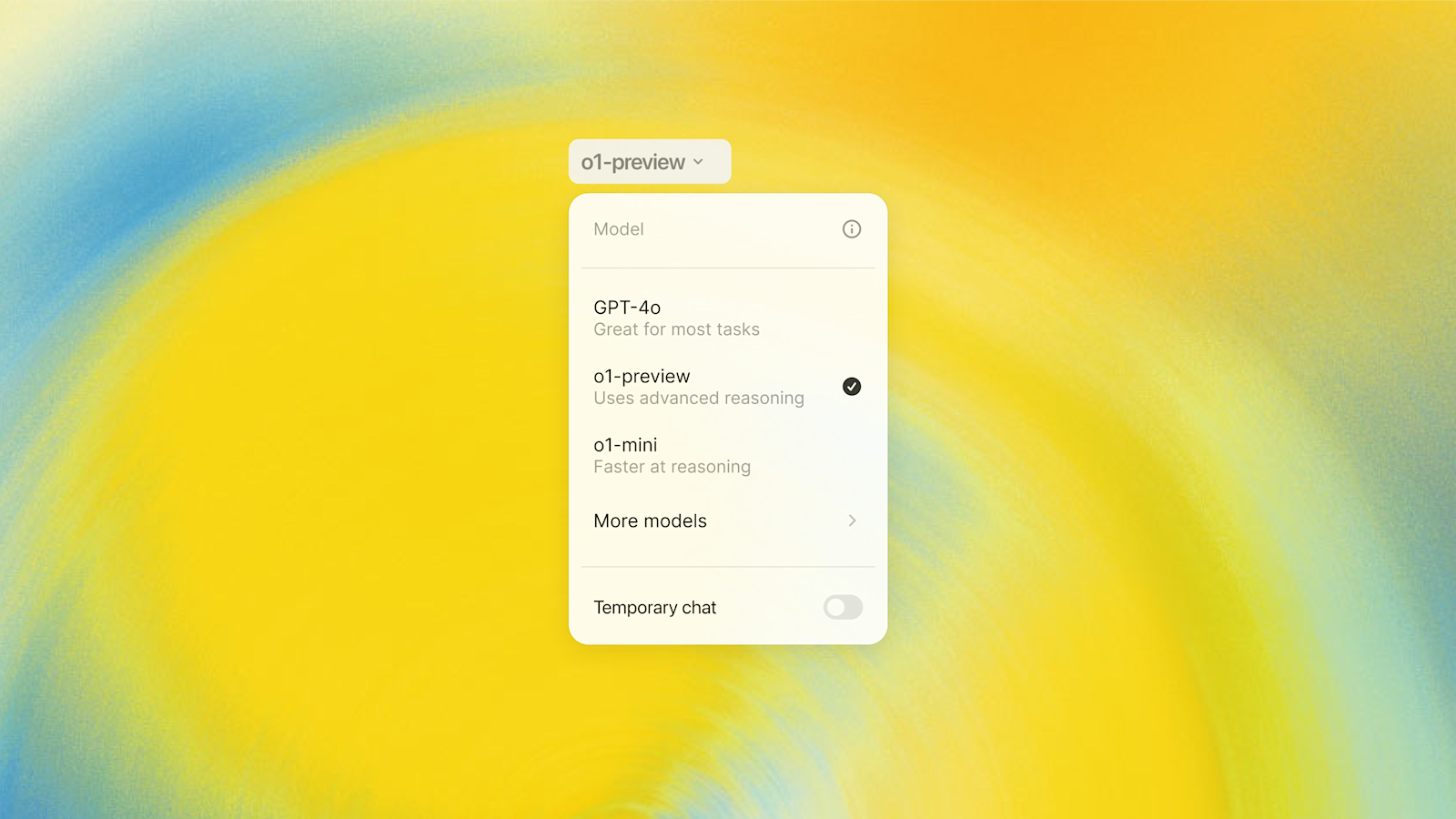
The Playbook: reusable how-tos, prompts, configs and tips pulled out of the news. From the Playbook, matched to the product and topics of this item.
- HeuristicGPT-5.5 offers conceptual clarity for codingUse GPT-5.5 for its strong conceptual understanding in complex coding and debugging tasks. · 2 min
- HeuristicGPT-5.5 shows stronger reasoning and autonomyLeverage GPT-5.5 for its enhanced reasoning and autonomy in complex software engineering tasks. · 3 min
- Model pickGPT-5.5 for agentic coding and knowledge workUse GPT-5.5 for complex tasks requiring planning, tool use, and iterative action. · 1 min
- HeuristicTrust GPT-5.5 to handle messy, multi-part tasksDelegate complex tasks to GPT-5.5 and let it plan, use tools, and check its work. · 2 min
Questions people ask
- What are the OpenAI o1 models designed for?
- The o1 reasoning models are designed to help with complex tasks in domains such as coding, strategy, and research.
- How are the o1 models being showcased?
- OpenAI is sharing how the o1 models can assist users through a video demonstration.
More from OpenAI News 1148 more









Page generated Oct 19, 2026. Summaries are Subvolts' own; the story belongs to OpenAI News.