


 Subvolts take Learn how AI-powered behavioral analysis secures systems by understanding human actions, not just code. Jan 16, 2026
- Developers
- Learn how AI models can be trained to understand human communication patterns for security applications.
- Business
- Understand the growing threat of AI-powered cyberattacks and how behavioral AI offers a new defense strategy.
This interview provides a deep dive into AI's role in cybersecurity with a leading company in the field.

#313 Evan Reiser: How Abnormal AI Protects Humans with Behavioral AI
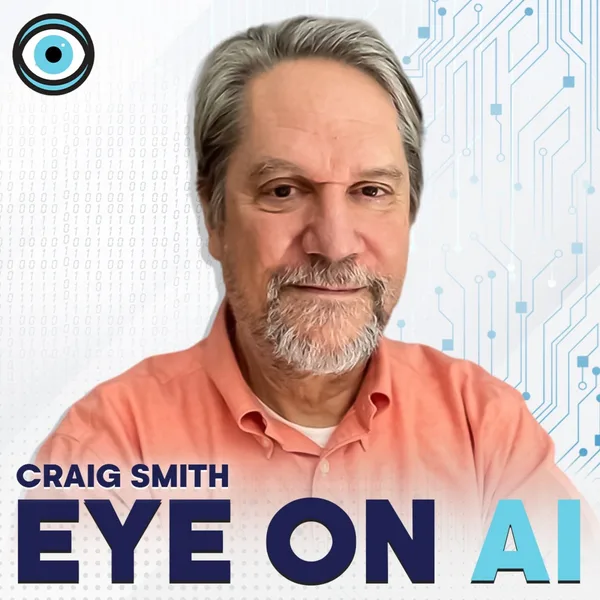
Audio streams from Craig S. Smith. Your place is remembered on this device.
From Subvolts
Summary and analysis by Subvolts editorial, AI-assisted.
This Eye on AI episode features Evan Reiser, CEO of Abnormal AI, discussing how AI transforms cybersecurity. They cover social engineering's cost, generative AI's role in attacks, and why human behavior is the primary security risk. Reiser explains how behavioral AI detects novel threats, contrasting it with traditional defenses. The conversation also touches on the AI arms race and the economics of cybercrime.
This episode explains how AI can spot cyberattacks by watching how people normally act and communicate. Attackers often trick people, and this AI focuses on those human weaknesses to stop threats that traditional security might miss.
This episode offers insights into the evolving cybersecurity landscape, focusing on the human element and advanced AI defenses. It's for security professionals and business leaders concerned about sophisticated cyber threats. The discussion on AI-driven attacks and defenses connects to ongoing developments at frontier AI labs, where understanding and mitigating AI misuse is a critical area of research and development.
- HostCraig S. Smith
- GuestEvan Reiserco-founder and CEO, Abnormal AI
- Guest: Evan Reiser, co-founder and CEO of Abnormal AI
- Show: Eye on AI
- Episode Title: #313 Evan Reiser: How Abnormal AI Protects Humans with Behavioral AI
- Length: 50 minutes
- Social Engineering Cost: Most costly form of cybercrime
- Human Attack Surface: Humans have become the primary attack surface in modern security
In this episode of Eye on AI, we sit down with Evan Reiser, co-founder and CEO of Abnormal AI, to unpack how AI has fundamentally changed the cybersecurity landscape.
We explore why social engineering remains the most costly form of cybercrime, how generative AI has lowered the barrier for sophisticated attacks, and why humans have become the primary attack surface in modern security. Evan explains why traditional, signature-based defenses fall short, how behavioral AI detects threats that have never existed before, and what it means to build security systems that understand how people actually work and communicate.
The conversation also looks ahead at the AI arms race between attackers and defenders, the economics driving cybercrime, and what it truly means to be an AI-native company operating at scale.
This episode is a deep dive into the human side of AI security and why the future of cybersecurity depends less on code and more on behavior.
Stay Updated:
Craig Smith on X: https://x.com/craigss
Eye on A.I. on X: https://x.com/EyeOn_AI
(00:00) Abnormal AI's origin
(02:31) Why phishing is still the biggest threat
(05:57) How attackers manipulate human trust
(10:05) The true cost of social engineering
(11:58) Vendor account compromise explained
(15:02) How AI changed cyber attacks
(16:28) Behavioral security vs traditional defenses
(19:55) Where Abnormal fits in the security stack
(22:24) Human psychology as the attack surface
(24:01) Why cyber defense is asymmetric
(28:48) Humans as the new zero-day
(31:01) Why attackers target people, not systems
(33:21) Behavioral modeling from ads to security
(36:10) Why money drives almost all attacks
(40:06) What happens after credentials are stolen
(42:18) Text scams and lateral movement
(43:55) What it means to be AI-native
(47:13) How Abnormal uses AI internally
- social engineering
- Evan Reiser
- tricking people into revealing information or performing actions that compromise security.
- signature-based defenses
- Evan Reiser
- security systems that rely on known patterns of malicious code to detect threats.
- behavioral AI
- Evan Reiser
- AI that analyzes normal patterns of human and system behavior to detect anomalies and potential threats.
55 min42 min51 min34 minUkraine's Secret Weapon: The Points System Winning the Drone War | Andrii Hrytseniuk
WithAndrii Hrytseniuk
Questions people ask
- Why is social engineering still a major cyber threat?
- Social engineering remains the most costly form of cybercrime because attackers effectively manipulate human trust and behavior.
- How does behavioral AI differ from traditional cybersecurity?
- Behavioral AI detects novel threats by understanding how people work and communicate, unlike traditional signature-based defenses that miss unknown attacks.
Page generated Oct 19, 2026. Summaries are Subvolts' own; the audio, artwork and notes belong to Craig S. Smith.