


Temporal data
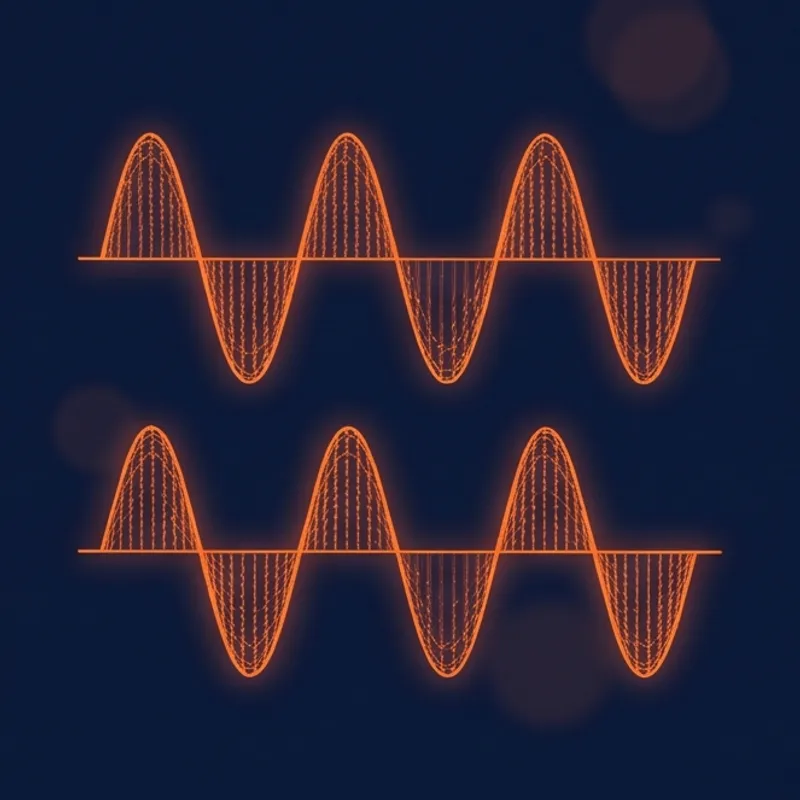
Data that changes over time, requiring models to understand sequences and relationships between points in time.
Temporal data is information that changes over time. Think of a video clip: the order of frames matters. If you shuffled them, the meaning would be lost.
AI models need to understand this temporal aspect to process things like speech, music, or video. They learn to recognize patterns and predict what might happen next based on what they've seen before.
Temporal data refers to data points indexed or ordered by time. This includes time series, sequential data, and event logs. Models processing temporal data must capture dependencies and relationships across different time steps, often using recurrent neural networks (RNNs), transformers with positional encodings, or state-space models.
The challenge lies in modeling long-range dependencies efficiently and handling irregular sampling. Tradeoffs involve computational cost, memory usage, and the ability to generalize to unseen temporal patterns.
Frontier AI labs are increasingly focused on models that can process and generate sequences, such as audio and video. This requires handling temporal data, where the order and timing of information are crucial. Google's Lyria 3 Clip is an example of a model designed to work with this type of time-dependent information.
- Lyria 3 ClipGoogle · Gemini Models ·
- Google Gemini
- Google Gemini models are being developed to understand and generate complex sequences, including audio-video data, which inherently involves temporal information.
- Time series analysis
- Focuses on statistical methods for analyzing time-stamped
- Sequential data
- A broader term that includes any data with an order, not necess
The concept of temporal data is fundamental to many scientific and engineering fields. In the context of AI, its importance grew with the development of sequential modeling techniques like Recurrent Neural Networks (RNNs).
Try asking an AI chatbot to summarize a short news article, then ask it to explain the events in chronological order. This tests its ability to understand the sequence of information presented.
The Playbook: reusable how-tos, prompts, configs and tips pulled out of the news.
- PromptRole-play a student struggling with math for AI tutor simulationSimulate a student's math struggles and uncertainty for AI tutor evaluation. · 5 min
- TemplateReusable workflow templates for healthcare teamsTeams can create and share templates for common workflows like documentation or prior authorizations. · 15 min
- TemplateTemplate for building an AI tool tailored to your workA structured approach to defining and building a custom AI tool for specific business needs. · 15 min
- TemplateEvals CSV prompt list for agent skillsA CSV file template for listing prompts used in evaluating agent skills. · 20 min
- HeuristicDouble coding agent task completion with docs linksProviding coding agents with a documentation link significantly increases their task completion rate. · 2 min
Questions people ask
- What is an example of temporal data?
- A video clip is a good example of temporal data, as the order of frames is essential to understanding the action.
- Why is temporal data important for AI?
- It allows AI models to understand and predict events in sequences, which is crucial for tasks like speech recognition, video analysis, and forecasting.
First seen on Subvolts Oct 10, 2026. Updated Oct 17, 2026. Written by an AI model from the items above and reviewed against them weekly; report an error.