


 Subvolts take AI adoption hinges on organizational change, not just tech, requiring a fundamental rebuild. May 22, 2026
- Developers
- Understand the enterprise adoption challenges beyond technical capabilities.
- Business
- Learn why organizational change is critical for successful AI integration and adoption.
This episode provides a grounded, expert assessment of enterprise AI adoption challenges, contrasting with optimistic industry narratives.
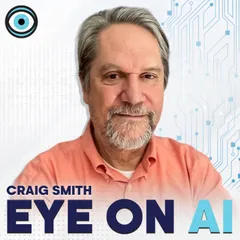
The Single Biggest Barrier to AI Adoption Isn't the Technology — It's This | Errol Gardner of EY
Audio streams from Craig S. Smith. Your place is remembered on this device.
From Subvolts
Summary and analysis by Subvolts editorial, AI-assisted.
Errol Gardner of EY assesses enterprise agentic AI maturity at less than 1 out of 10. He argues the biggest barrier is not technology but human resistance to organizational rebuilding. The 55-minute "Eye on AI" episode with Craig S. Smith explores this, comparing it to slower cloud adoption and predicting government intervention for workforce displacement. Gardner also questions the long-term sustainability of the tech sector's value exchange with traditional industries.
Deploying smart AI assistants in big companies is hard. It's not about the AI itself, but about changing how the whole company works, which people resist. This matters because it means AI's impact will take longer than many expect.
This episode offers a grounded perspective on agentic AI adoption, challenging the hype cycle. It's for business leaders and strategists grappling with AI integration, highlighting that organizational change, not just technology, is the key hurdle. This contrasts with the rapid development and deployment narratives from frontier labs like OpenAI and Google Gemini, suggesting a slower, more complex path to widespread enterprise AI. The discussion on workforce displacement also touches on policy implications relevant to all major AI players.
- HostCraig S. Smith
- GuestErrol GardnerEY
- Guest: Errol Gardner of EY
- Show: Eye on AI
- Length: 55 minutes
- Agentic AI Maturity: Less than 1 out of 10
- Biggest Barrier: Human resistance to organizational rebuilding
Errol Gardner has spent 35 years advising the world's largest organizations through major technology transitions, and his assessment of where enterprise agentic AI actually stands is one of the most grounded you'll hear anywhere. His number: less than 1 out of 10 on a maturity scale. Not because the technology isn't ready, but because deploying agentic AI across an organization doesn't tweak how it works, it requires rebuilding how it works. And that is a fundamentally different kind of challenge than anything the AI hype cycle is currently acknowledging.
In this conversation with Craig Smith, Gardner walks through why cloud adoption still hasn't reached 7 out of 10, what that means for agentic AI timelines, why the single biggest barrier to adoption is human resistance rather than technical limitation, and why governments will ultimately have to step in to manage workforce displacement at scale. He also raises a question that almost nobody is asking: is the value exchange between the technology sector and traditional industries sustainable in the long run? It's a conversation that doesn't just describe where AI is, it explains why the gap between the narrative and the reality has never been wider.
Subscribe to Eye on A.I. for weekly conversations with the people building and deploying the future of AI.
- agentic AI
- Errol Gardner
- AI systems that can act independently to achieve goals.
55 min42 min51 min34 minUkraine's Secret Weapon: The Points System Winning the Drone War | Andrii Hrytseniuk
WithAndrii Hrytseniuk
 1 h 13
 41 min
Questions people ask
- What is the current maturity of enterprise agentic AI?
- Errol Gardner estimates enterprise agentic AI maturity at less than 1 out of 10, indicating significant room for growth and adoption challenges.
- What is the main obstacle to adopting agentic AI?
- The primary barrier is human resistance to the fundamental organizational rebuilding required, rather than limitations in the technology itself.
Page generated Oct 19, 2026. Summaries are Subvolts' own; the audio, artwork and notes belong to Craig S. Smith.