


 Subvolts take Analyst Benedict Evans grounds AI discussions in economic history, not platform comparisons. Jul 16, 2026
- Developers
- Learn why coding is an early enterprise use case and how to approach building new AI applications.
- Business
- Understand how AI's economic impact might unfold by examining historical technology adoption patterns.
Features a widely-read analyst offering a historically grounded perspective on AI's economic evolution and current market dynamics.
Ep 91: Top AI Analyst Unpacks Today's AI Hype Cycle
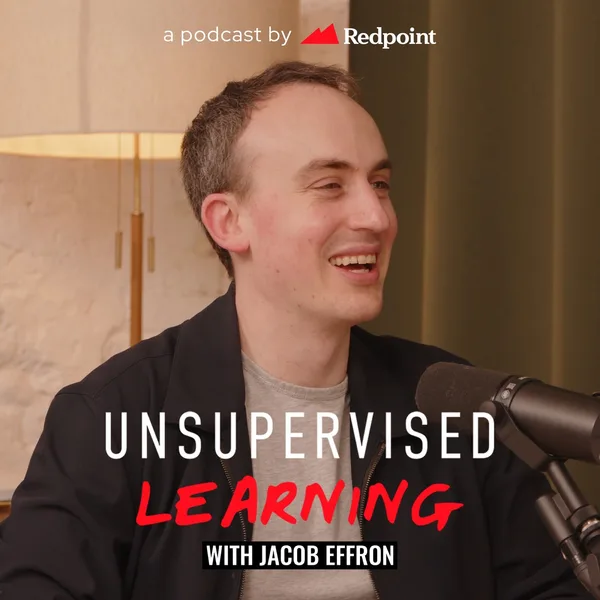
Audio streams from by Redpoint Ventures. Your place is remembered on this device.
From Subvolts
Summary and analysis by Subvolts editorial, AI-assisted.
Benedict Evans joins Jacob Effron on Unsupervised Learning to discuss AI's current hype cycle. Evans argues comparing AI to past tech shifts is unhelpful. He suggests studying economic evolution of previous technologies offers better insight into AI's value accrual. Uncertainty about AI's physical limits fuels both hype and doomerism.
This episode explains why comparing AI to the internet's rise is misleading. Instead, it looks at how past technologies evolved economically to predict where AI's real value will appear. This helps understand the current excitement and fear around AI's future.
This episode offers a grounded perspective on AI's trajectory from a seasoned analyst. It's for anyone trying to cut through the noise surrounding AI's potential and understand its economic implications. Evans connects current AI developments to historical patterns, providing context for the rapid advancements and speculative discussions around frontier labs like OpenAI and Google Gemini. Listeners will learn why current AI capabilities are uneven and how future applications may emerge, offering a more realistic outlook than pure speculation.
- HostJacob Effron
- HostJordan Segall
- GuestBenedict EvansAnalyst
- Guest: Benedict Evans, tech analyst
- Show: Unsupervised Learning
- Episode Title: Ep 91: Top AI Analyst Unpacks Today's AI Hype Cycle
- Length: 74 minutes
- Core Thesis: Comparing AI scale to past platform shifts is useless; study economic evolution instead.
- Key AI Difference: Unknown physical/scientific limits fuel hype and doomerism.
Benedict Evans, one of tech's most widely-read analysts, joins Jacob Effron. The conversation centers on Benedict's core thesis that comparing AI's scale to past platform shifts (the internet, mobile, PCs) is analytically useless, and that the more productive move is studying how those previous technologies actually evolved economically to reason about where AI's value will accrue. He argues the one genuine difference this time is that we don't know AI's physical or scientific limits, unlike past shifts where the boundaries were at least knowable, and that this uncertainty is what fuels both AGI hype and doomerism without resolving anything. Benedict unpacks why capabilities remain jagged, meaning usage is jagged too, why coding became the first real enterprise use case thanks to scalable verification, and why most consumer and enterprise use cases still have to be invented by entrepreneurs rather than emerging spontaneously once models improve. He also lays out why foundation model labs may end up structurally like TSMC rather than Windows, valuable but bounded rather than owning the entire stack, walks through why automation has historically meant more work rather than less (using a hundred years of rising accountant headcount as evidence), and explains why industries like Uber and Airbnb, or Caterpillar and the internet, show just how unevenly this kind of technology actually lands. Throughout, he offers candid, historically grounded takes on OpenAI's product sprawl versus Anthropic's narrow coding bet, Apple's stumbled AI moment, and why most companies, unlike Silicon Valley, have far bigger priorities than AI on their minds.
(0:00) Intro
(1:31) Is AI Bigger Than the Internet?
(10:10) Barriers of Getting From Demos to Daily Use
(20:15) Why Job Predictions Fail
(25:52) Where's the Moat?
(33:55) Will Models Eat the App Layer?
(39:25) When Average Isn't Enough and Models Don't Work
(45:58) Reflections on OpenAI
(55:04) Consumer Usage Is Still Shallow
(58:51) What's Required for More Enterprise Adoption
(1:03:47) Opinion on Sora
(1:06:27) Quickfire
Jacob is an AI investor at Redpoint Ventures. He's led Redpoint's investments in companies like Abridge, Physical Intelligence & Legora. Follow Jacob on Twitter (@jacobeffron).
On Unsupervised Learning we probe the sharpest minds in AI in search for the truth about what's real today, what will be real in the future and what it all means for businesses and the world. If you're a builder, researcher or investor navigating the AI world, this podcast will help you deconstruct and understand the most important breakthroughs and see a clearer picture of reality. Subscribe to this show to stay up to date on our latest episodes.
- AGI hype
- Benedict Evans
- Excitement about artificial general intelligence, or AI that can perform any intellectual task a human can.
- foundation model labs
- Benedict Evans
- Companies that build large, general-purpose AI models that others can adapt for specific uses.
Same guests, other shows
 1 h 01
Benedict Evans: OpenAI’s Moat Problem & the Future of Software
WithBenedict Evans
1 h 13 44 min
What Apple’s OpenAI lawsuit is really about
WithHayden Field


Questions people ask
- Why is comparing AI to past tech shifts like the internet or mobile not useful?
- Analyst Benedict Evans argues that studying how previous technologies evolved economically offers more productive insights into where AI's value will accrue than direct comparisons.
- What is the one genuine difference with AI compared to past technology shifts?
- The key difference is that AI's physical or scientific limits are currently unknown, unlike past shifts where boundaries were at least knowable. This uncertainty fuels speculation.
Page generated Oct 19, 2026. Summaries are Subvolts' own; the audio, artwork and notes belong to by Redpoint Ventures.