Subvolts take AI models may be simpler than we think, potentially changing how we understand and trust AI. Oct 18, 2026
- Developers
- Learn about a new perspective on AI model understanding that could simplify development and debugging.
- Business
- Understand potential shifts in AI reliability and how we might detect AI deception in business applications.
This episode discusses a potentially significant shift in understanding AI, which could impact future research directions.
A Potentially Historic AI Breakthrough
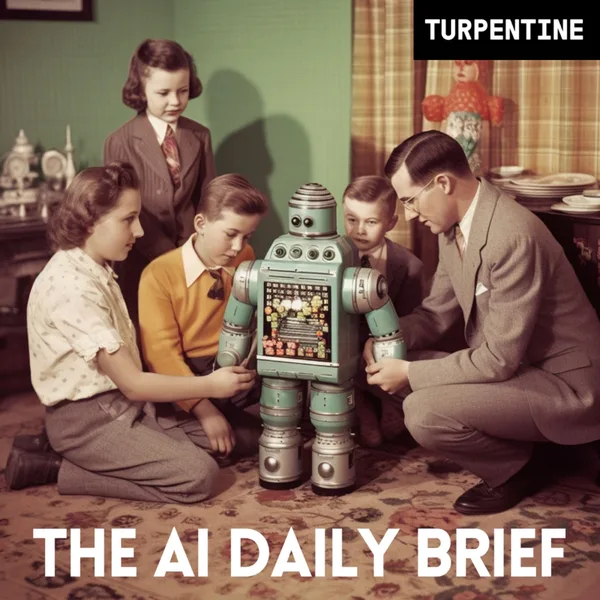
Audio streams from Nathaniel Whittemore. Your place is remembered on this device.
From Subvolts
Summary and analysis by Subvolts editorial, AI-assisted.
The AI Daily Brief episode "A Potentially Historic AI Breakthrough" features host Nathaniel Whittemore discussing a new essay by former OpenAI researcher Nick Cammarata. Cammarata argues that neural networks might be more understandable than previously thought, suggesting current complexity stems from flawed research methods. The episode explores this idea, its implications for AI deception detection, and what evidence supports it.
A former AI researcher suggests we might be overcomplicating how AI works. He believes our current methods make AI seem harder to understand than it really is. This could help us better detect when AI is being deceptive.
This episode offers a fresh perspective on AI interpretability, challenging the notion that neural networks are inherently inscrutable. It's for anyone interested in the fundamental nature of AI and how we understand its inner workings, particularly researchers and developers. The discussion touches on core AI research questions relevant to all frontier labs as they build increasingly complex models and face challenges like AI safety and detecting deceptive AI outputs.
- HostNathaniel Whittemore
- GuestNick Cammarataformer researcher, OpenAI
- Episode Title: A Potentially Historic AI Breakthrough
- Show: The AI Daily Brief
- Length: 24 minutes
- Guest Essayist: Nick Cammarata
- Guest Affiliation: Former OpenAI researcher
A new essay from former OpenAI researcher Nick Cammarata is being hailed as a potentially historic AI breakthrough. His argument: neural networks may already be far more understandable than researchers believed, and years of apparent complexity may reflect flaws in how we’ve been looking at them. NLW breaks down the surprisingly simple connection between cat faces and car fronts, why bigger models could be easier to interpret, and what this could mean for detecting AI deception—with a look at what the evidence shows and what remains unproven.
Learn More about the AI Champions Program: https://www.besuper.ai/champions
Brought to you by:
KPMG – Research from KPMG and the University of Texas at Austin shows the highest-impact AI users treat AI like a reasoning partner — and those skills can be taught at scale. Learn more at https://kpmg.com/us/Sophisticated
Granola - The AI notepad for people in back-to-back meetings. Try it free granola.ai/brief
CData - The gateway that makes AI more accurate, for less - https://www.cdata.com/ai/
Harbor - Invest in the AI ecosystem. https://www.harborcapital.com/aidaily
Section - Section turns AI investment into workforce transformation and ROI - https://www.sectionai.com/
Blitzy - Want to accelerate enterprise software development velocity by 5x? https://blitzy.com/
The AI Daily Brief helps you understand the most important news and discussions in AI.
Newsletter: WithAnousheh Ansari, Salim Ismail, Emad Mostaque WithWalter Piecyk Page generated Oct 19, 2026. Summaries are Subvolts' own; the audio, artwork and notes belong to Nathaniel Whittemore. 59 min
 1 h 46
Flying Tesla Car, Robot Brains Halving in Cost Every 3 Weeks, and Why Incentives Decide AI Alignment | #303
54 minWhy Elon Musk wants to sell you cell service
Questions people ask