


 Subvolts take Train frontier AI models cheaper by using distributed global compute instead of data centers. Apr 29, 2026
- Developers
- Learn about decentralized compute architectures and model parallelism for training large AI models cost-effectively.
- Business
- Understand how distributed training can reduce the massive infrastructure costs associated with developing frontier AI models.
This interview explores a novel, cost-effective approach to training large AI models, potentially democratizing access to advanced AI development.

#340 Steffen Cruz: Training AI Without Data Centres
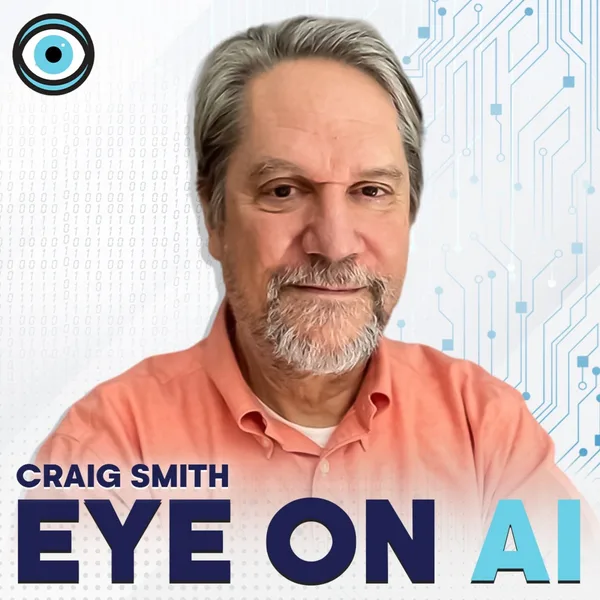
Audio streams from Craig S. Smith. Your place is remembered on this device.
From Subvolts
Summary and analysis by Subvolts editorial, AI-assisted.
Eye on AI features Steffen Cruz, co-founder and CTO of Macrocosmos, discussing training AI models without data centers. Cruz explains how distributed computing, using idle devices globally coordinated via the Bittensor blockchain, offers a cheaper alternative to massive GPU warehouses. Macrocosmos's IOTA technology orchestrates these nodes to act as a single supercomputer, enabling frontier-scale model training at a fraction of the cost.
Imagine using many small computers worldwide, like a giant team, to train AI instead of one giant supercomputer. This saves a lot of money and energy. It means more people can build powerful AI without needing huge, expensive buildings full of computers.
This episode explores a radical shift in AI training, moving away from costly data centers towards decentralized compute. Listeners learn how distributed systems can make training large models accessible and affordable for more entities. This is relevant as major AI labs like Google Gemini and OpenAI invest heavily in hardware, while startups and researchers seek cost-effective alternatives. It highlights a potential future for AI infrastructure.
- HostCraig S. Smith
- GuestSteffen Cruzco-founder and CTO, Macrocosmos
- Guest: Steffen Cruz, co-founder and CTO of Macrocosmos
- Show: Eye on AI
- Episode Title: #340 Steffen Cruz: Training AI Without Data Centres
- Length: 46 minutes
- Training Method: Distributed compute using idle devices globally via Bittensor blockchain
- Cost Savings Claim: 70 billion parameter models trained at 10 to 20 percent of centralized costs
What if you could train a frontier AI model without building a single data centre?
In this episode of Eye on AI, Craig Smith sits down with Steffen Cruz, co-founder and CTO of Macrocosmos, to explore a radical alternative to the way AI models are built today. Instead of billion-dollar GPU warehouses, Steffen is training large language models using idle compute from devices distributed around the world, coordinated through the Bittensor blockchain.
Steffen breaks down why the centralised data centre model is heading toward a wall. Projects like Stargate and Colossus cost tens of billions of dollars, and as appetite for larger models grows, the economics simply stop making sense. He explains how distributed training flips this on its head, tapping into surplus energy, underutilised GPUs, and even consumer devices like Mac Minis to train models at a fraction of the cost.
We also get into IOTA, Macrocosmos's flagship technology, an orchestration layer that takes compute nodes scattered across the globe and makes them act like a single supercomputer. No single device runs the full model. Instead, each one carries a small slice, a technique called model parallelism, and together they can train frontier-scale models that would otherwise be out of reach for startups, researchers, and enterprises.
Finally, Steffen shares what he's building toward: 70 billion parameter models trained at 10 to 20 percent of centralised costs, a two-sided marketplace for compute, and a future where anyone with a spare GPU or Mac Mini can earn passive income while contributing to the democratisation of AI.
Subscribe for more conversations with the people building the future of AI and emerging technology.
Stay Updated:
Craig Smith on X: https://x.com/craigss
Eye on A.I. on X: https://x.com/EyeOn_AI
Timestamp:
(00:00) Introduction: The Problem With Blockchain AI Projects
(06:39) Meet Steffen Cruz: From Subatomic Physics to Decentralised AI
(09:16) What Is a Bittensor? The Blockchain Built for AI
(11:53) How the Blockchain Actually Works: Registry, Clock, and Rewards
(15:08) Why Data Centres Are Hitting a Wall
(22:01) Distributed Training vs Federated Learning: What's the Difference?
(27:47) Train at Home: Turning Your Mac Mini Into a Passive Income Machine
(32:49) IOTA Explained: Building a Global Supercomputer From Spare Parts
(39:43) How the Network Scales: From 256 Nodes to Limitless Compute
(44:39) The Road Ahead: 70B Parameter Models and the Future of Affordable A
- model parallelism
- Steffen Cruz
- Splitting a large AI model into smaller parts that run on different computers simultaneously.
- GPU
- Steffen Cruz
- Graphics Processing Unit, a type of computer chip powerful for AI calculations.
55 min42 min51 min34 minUkraine's Secret Weapon: The Points System Winning the Drone War | Andrii Hrytseniuk
WithAndrii Hrytseniuk
Same guests, other shows
47 min 38 min
Why AI needs a new kind of supercomputer network - Episode 18
WithMark Handley, Greg Steinbrecher
 1 h 23
 46 min
From Vector Databases to Knowledge Engines: The Next Layer of AI
WithAsh Ashutosh
Questions people ask
- How can AI models be trained without data centers?
- AI models can be trained using idle compute power from devices distributed globally, coordinated through technologies like the Bittensor blockchain and orchestration layers like IOTA.
- What is Macrocosmos's approach to AI training?
- Macrocosmos uses distributed training, where many scattered compute nodes work together like a single supercomputer using model parallelism, training large models at a fraction of centralized costs.
Page generated Oct 19, 2026. Summaries are Subvolts' own; the audio, artwork and notes belong to Craig S. Smith.