


 Subvolts take AI apps need constant reinvention; Legora's CEO shares how they adapt and grow. Mar 11, 2026
- Developers
- Learn how rapid foundation model updates necessitate rebuilding core AI application features.
- Business
- Understand the operational model for AI-native companies and AI's competitive impact on the legal sector.
A detailed interview with a CEO discussing significant funding and operational strategies for an AI-native company.
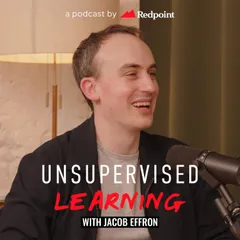
Ep 82: Behind Legora's $550M Raise, Model Competition, Doubling Revenue Every Quarter, & US Expansion
Audio streams from by Redpoint Ventures. Your place is remembered on this device.
From Subvolts
Summary and analysis by Subvolts editorial, AI-assisted.
Max Jungestål, CEO of Legora, discusses the company's $550 million Series D funding on Unsupervised Learning. He explains how AI application layers require constant reinvention due to rapid model improvements, forcing Legora to rebuild features. Jungestål also details AI's diffusion in law firms, the challenges of AI-native firms, and Legora's US expansion strategy.
Building AI software means constantly updating your product because the AI models it uses change quickly. This episode explains how one company, Legora, handles this by rebuilding features often, and why this is key to their success in the legal industry.
This episode offers a candid look inside an AI-native company navigating rapid technological shifts. It's for founders, product leaders, and investors interested in the operational realities of building AI applications. Jungestål's insights on adapting to foundation model updates connect directly to the ongoing advancements from labs like OpenAI and Google Gemini, highlighting the need for agility in the AI application layer.
- HostJacob Effron
- HostJordan Segall
- GuestMax JungestålCEO, Legora
- Guest: Max Jungestål, CEO of Legora
- Show: Unsupervised Learning
- Episode Title: Ep 82: Behind Legora's $550M Raise, Model Competition, Doubling Revenue Every Quarter, & US Expansion
- Funding: $550 million Series D for Legora
- Model Impact: Step-function improvements in models like Opus 4.5 and 4.6 forced Legora to rebuild core product features.
Max Jungestål, CEO of Legora, joins Jacob Effron and Logan Bartlett to discuss the company's $550M Series D and share a candid account of what building an AI-native company at speed actually looks like from the inside.
Max argues that the AI application layer requires a fundamentally different operating model than traditional SaaS, one built on low ego, constant reinvention, and a willingness to watch nine months of work get washed away by a model update. He walks through how step-function improvements in the underlying models, particularly Opus 4.5 and 4.6, have repeatedly forced Legora to rebuild core product features from scratch, and why he sees that as a feature, not a bug.
On the legal industry, Max offers a ground-level view of how AI is actually diffusing through law firms, less through top-down mandates and more through competitive pressure between firms and, increasingly, from enterprise clients demanding efficiency from their outside counsel. He pushes back on the viability of AI-native law firms, dismisses outcome-based pricing as harder than it looks, and makes the case for why foundation model competition creates tailwinds rather than threats for a company with Legora's depth.
The episode closes with a detailed look at the US expansion strategy, including the deliberate cultural decisions, like flying all New York hires to Stockholm for onboarding, that Max believes are the real source of Legora's compounding advantage.
[0:00] Intro
[1:16] Legora's Series D Story
[3:24] Why You Need Low Ego to Build in AI
[5:58] From 60% to 100% Accuracy in One Summer
[7:04] Law Firm Economics Shift
[14:09] Pricing Seats Vs Outcomes
[18:31] Why Foundation Models Entering Legal Helps Legora
[30:10] Convincing a 75-Year-Old Partner to Go All In
[33:02] Hiring Legal Engineers
[34:32] Running an AI-Native Company
[35:57] The Opus 4.5 Christmas Breakthrough
[40:02] Building With Customers
[44:01] All In On US Expansion
[51:22] Stockholm Startup DNA
With your co-hosts:
@jacobeffron
- Partner at Redpoint, Former PM Flatiron Health
@patrickachase
- Partner at Redpoint, Former ML Engineer LinkedIn
@ericabrescia
- Former COO Github, Founder Bitnami (acq’d by VMWare)
@jordan_segall
- Partner at Redpoint
Jacob is an AI investor at Redpoint Ventures. He's led Redpoint's investments in companies like Abridge, Physical Intelligence & Legora. Follow Jacob on Twitter (@jacobeffron).
On Unsupervised Learning we probe the sharpest minds in AI in search for the truth about what's real today, what will be real in the future and what it all means for businesses and the world. If you're a builder, researcher or investor navigating the AI world, this podcast will help you deconstruct and understand the most important breakthroughs and see a clearer picture of reality. Subscribe to this show to stay up to date on our latest episodes.
- SaaS
- Max Jungestål
- Software as a Service, a common way to sell software online.
- foundation model
- Max Jungestål
- A large, general-purpose AI model that can be adapted for many tasks.
 24 min
 48 min
 44 min
Greetings, Earthlings: Philip Johnston of Starcloud on Data Centers in Space
WithPhilip Johnston
 31 min
Building AI for better healthcare - Episode 14
WithNate Gross, Karan Singhal
Questions people ask
- How has Legora's Series D funding impacted the company?
- Legora raised $550 million in its Series D, with the CEO sharing an inside account of building an AI-native company at speed.
- How is AI affecting the legal industry?
- AI is diffusing through law firms due to competitive pressure and client demands for efficiency, rather than top-down mandates.
Page generated Oct 19, 2026. Summaries are Subvolts' own; the audio, artwork and notes belong to by Redpoint Ventures.